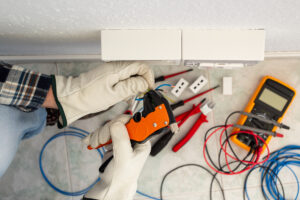
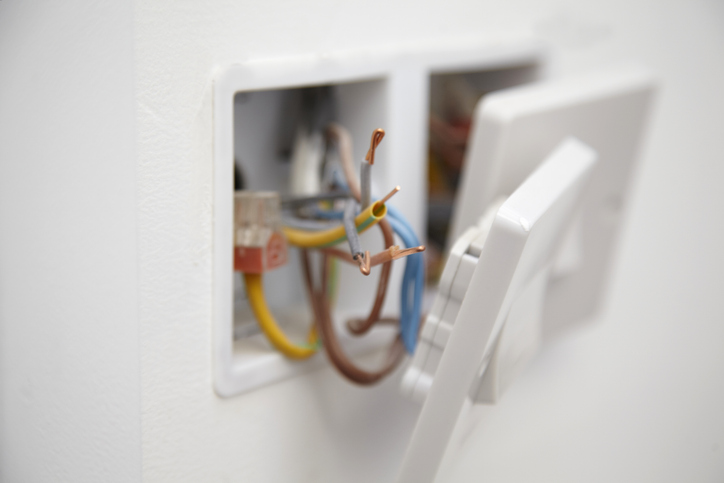
An electrician finds a hidden wiring fault by combining visual inspection, circuit testing, careful isolation and a structured fault finding process. Rather than guessing where the problem might be, they use professional testing equipment to narrow down the affected circuit, identify the type of fault and locate the most likely source safely.
Hidden wiring faults can be frustrating because they are not always visible. A circuit may trip without warning. Lights may flicker. A socket may stop working. An RCD may trip only during wet weather. In some cases, the problem may happen once every few days, making it even harder to track down.
The important point is that hidden electrical faults should not be ignored. Even if the power comes back on after resetting a breaker, the underlying problem may still be present. A qualified electrician can investigate the issue properly and reduce the risk of further damage, electric shock or fire.
What Is a Hidden Wiring Fault?
A hidden wiring fault is an electrical problem that is not immediately visible from switches, sockets, fittings or the consumer unit. The fault may be behind a wall, under a floor, above a ceiling, in a loft, inside an accessory, within an outdoor fitting or along a concealed cable route.
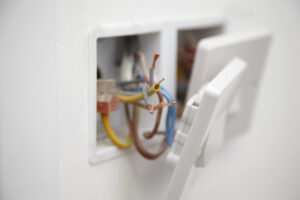
Common hidden wiring faults include damaged cable insulation, loose connections, trapped cables, poor junction boxes, water ingress, rodent damage, overloaded spurs, incorrect DIY alterations and deteriorated wiring.
Some faults are constant, while others are intermittent. A constant fault may cause a breaker to trip immediately. An intermittent fault may only appear when a circuit warms up, when it rains, when a certain appliance is used or when movement affects a loose connection.
This is why proper electrical fault finding is a process. The electrician has to identify what type of fault is present before deciding where it is likely to be.
What Are the Signs of a Hidden Wiring Fault?
Hidden wiring faults can show up in several ways. Some warning signs are obvious, while others are easy to dismiss as minor inconvenience.
Typical signs include repeated tripping, lights flickering, sockets working intermittently, burning smells, buzzing sounds, warm switches, damaged accessories, unexplained power loss or an RCD that trips for no clear reason.
A hidden wiring fault may also be linked to specific conditions. For example, if the power trips after heavy rain, outdoor electrics, garden lighting or external sockets may be involved. If a circuit trips when floorboards are walked over, there could be a damaged cable or loose connection affected by movement.
In older homes, hidden faults may be discovered during renovation work, consumer unit upgrades or an Electrical Installation Condition Report. Modern protective devices can reveal faults that older fuse boards did not detect.
Why Are Hidden Electrical Faults Difficult to Find?
Hidden electrical faults are difficult to find because wiring often runs through inaccessible areas. Cables may be buried in plaster, hidden behind kitchen units, routed under floors, clipped in loft spaces or connected through junction boxes that are no longer easy to reach.
Another challenge is that symptoms can be misleading. A socket may stop working in one room, but the fault may be elsewhere on the same circuit. A light fitting may flicker, but the problem might be at the switch, ceiling rose, junction box or consumer unit.
Intermittent faults are especially difficult because they may not be present when the electrician first arrives. Moisture, temperature, appliance use and movement can all affect when the fault appears.
This is why an experienced electrician will not simply replace random parts and hope for the best. They will work through the installation logically.
Step One: Asking the Right Questions
Fault finding usually begins with questions. The electrician will want to understand what has happened, when it started and whether there is a pattern.
They may ask whether the fault happens at a particular time of day, after rain, when an appliance is used, after building work or when certain lights or sockets are switched on. They may also ask whether the property has had recent leaks, DIY work, pest problems, decorating, new appliances or electrical additions.
These questions are important because they help narrow the search. For example, a fault that appears only during wet weather suggests a different investigation from one that happens when the oven is switched on.
Homeowners can help by making notes before the electrician arrives. If you know which circuit trips, what appliances were in use and whether the weather was wet, that information can save time.
Step Two: Visual Inspection
The electrician will usually carry out a visual inspection before testing. This helps identify obvious signs of damage, poor workmanship or unsafe conditions.
They may inspect the consumer unit, sockets, switches, light fittings, outdoor electrics, visible cables, loft wiring and any areas linked to the fault. They will look for scorch marks, cracked accessories, loose fittings, signs of overheating, water damage, poor cable routes and evidence of DIY alterations.
Visual inspection does not reveal every hidden issue, but it can provide useful clues. A garden light full of water, a cracked outdoor socket or a loose switch may point directly to the problem. In other cases, the visual inspection helps decide which tests should be carried out next.
Step Three: Isolating the Affected Circuit
The next stage is to identify the affected circuit. This might be a socket circuit, lighting circuit, cooker circuit, shower circuit, outdoor supply or another dedicated circuit.
If the consumer unit is labelled correctly, this may be straightforward. If the labelling is missing or inaccurate, the electrician may need to test and trace which areas are supplied by each breaker.
Isolating the circuit is essential for safety and accuracy. It prevents unnecessary disturbance to unaffected circuits and allows the electrician to focus on the part of the installation where the fault is most likely.
For RCD tripping problems, the process can be more involved because one RCD may protect several circuits. The electrician may need to separate circuits temporarily and test them individually to identify which one is causing the issue.
Step Four: Disconnecting Appliances and Loads
Before assuming the fixed wiring is at fault, the electrician may check whether connected appliances or equipment are causing the problem.
Faulty appliances are a common cause of tripping. Washing machines, dishwashers, tumble dryers, ovens, immersion heaters, fridges, freezers and outdoor equipment can all develop faults.
On socket circuits, appliances can be unplugged and the circuit tested again. On fixed equipment, such as an electric shower, cooker hood, extractor fan or immersion heater, safe isolation and testing may be needed.
This step matters because appliance faults can look like wiring faults. If the electrician can prove that the fixed circuit is sound and one appliance is causing the issue, the repair route becomes much clearer.
What Testing Equipment Does an Electrician Use?
Electricians use specialist test instruments to investigate hidden wiring faults. These tools help identify problems that cannot be seen during a visual inspection.
Common tests may include insulation resistance testing, continuity testing, polarity testing, earth fault loop impedance testing and RCD testing. The exact tests depend on the symptoms and type of circuit.
Insulation Resistance Testing
Insulation resistance testing checks whether the insulation around conductors is in good condition. Poor insulation can allow current to leak between conductors or to earth, which may cause tripping or unsafe conditions.
This test is especially useful for finding damaged cables, moisture problems and deteriorated wiring. If the insulation resistance is poor, the electrician can divide the circuit into sections to narrow down where the fault is likely to be.
Continuity Testing
Continuity testing checks whether conductors are connected properly and whether the circuit path is complete. It can help identify broken conductors, loose connections and problems with ring final circuits.
For socket circuits, continuity testing can confirm whether the ring is intact or whether there is a break. A broken ring can be unsafe because it may leave parts of the circuit carrying more current than intended.
Polarity Testing
Polarity testing confirms that live, neutral and earth conductors are connected correctly. Incorrect polarity can create serious safety risks, especially if switches or protective devices do not operate as expected.
Polarity problems can occur after DIY work, poor repairs or incorrectly connected accessories.
RCD Testing
RCD testing checks whether the RCD trips within the required time when a fault is simulated. If an RCD is too slow, unreliable or faulty, it may not provide the intended protection.
However, if an RCD trips repeatedly, the device itself is not always the problem. It may be correctly detecting leakage current elsewhere in the installation.
Can a Hidden Wiring Fault Be Found Without Damaging Walls?
In many cases, yes. Electricians can often narrow down a hidden wiring fault using testing and inspection before any walls, floors or ceilings are disturbed.
The aim is to avoid unnecessary damage. By dividing circuits into sections, testing at accessories and using the layout of the property, the electrician can often identify the likely fault area with reasonable accuracy.
However, some faults may eventually require access to hidden wiring. If a damaged cable is buried behind plaster or under flooring, repair may involve lifting floorboards, opening a section of wall or accessing a ceiling void.
A careful fault finding process reduces the amount of disruption. Instead of cutting into several areas at random, the electrician uses test results to target the most likely location.
How Electricians Narrow Down the Fault Location
Once testing confirms the type of fault, the electrician will usually split the circuit into smaller sections. This is known as sectional testing.
For example, on a socket circuit, they may disconnect sections at sockets or junction points, then test each section separately. If one section tests poorly and another tests correctly, the fault can be narrowed down.
On lighting circuits, the electrician may test between switches, ceiling roses, fittings and junction boxes. Outdoor lighting may be disconnected from the indoor circuit to see whether the fault clears.
This methodical approach is much safer and more accurate than guessing. It also helps identify whether there is one fault or several issues contributing to the problem.
Common Places Hidden Wiring Faults Are Found
Hidden wiring faults are often found in places where cables are more vulnerable to damage or moisture.
Common locations include behind sockets, inside light fittings, under floorboards, in loft spaces, outdoor lights, garden junction boxes, sheds, garages, kitchens, bathrooms and areas affected by leaks.
Cables can also be damaged by nails and screws during DIY work. Hanging shelves, fitting skirting boards, installing kitchen units or laying flooring can accidentally damage hidden wiring.
Rodent damage is another possibility, particularly in lofts, outbuildings and older properties. Chewed insulation can create faults that may not be visible until the area is inspected.
Why Outdoor Electrics Often Cause Hidden Faults
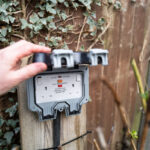
Outdoor electrics are a frequent source of hidden faults because they are exposed to weather. Water can enter fittings, sockets, cable joints and underground routes. Over time, moisture can corrode connections and reduce insulation resistance.
A common pattern is an RCD that trips after rain or during damp weather. The circuit may work normally on dry days, then fail when moisture reaches the damaged area.
Outdoor faults may be linked to garden lights, pond pumps, external sockets, security lighting, shed supplies or poorly sealed junction boxes. Professional testing can help separate the outdoor section from the rest of the circuit to confirm whether it is the cause.
Why Old or Altered Wiring Can Make Fault Finding Harder
Older properties can be more complex because the wiring may have been altered many times. There may be a mix of old and new cable, hidden junction boxes, undocumented additions and circuits that do not follow an obvious route.
Previous DIY work can make this harder. A socket may have been added from an unsuitable point, a junction box may be hidden under flooring, or a lighting circuit may have been altered without proper testing.
This does not mean the fault cannot be found. It simply means the electrician may need more time to understand the circuit before making repairs.
What Happens After the Fault Is Found?
Once the fault has been identified, the electrician can explain the repair options. The right solution depends on the type and location of the problem.
A loose connection may be repaired at the accessory. A damaged socket or switch may be replaced. A water-damaged outdoor fitting may need replacement and better weather protection. A damaged cable may need repairing or rerouting. If the wiring is old or unsafe in several areas, more extensive remedial work may be recommended.
After repair, the electrician should retest the circuit to confirm that the fault has been cleared and the circuit is safe to use.
When Should You Call an Electrician for Fault Finding?
You should call an electrician if a breaker will not reset, an RCD keeps tripping, lights flicker repeatedly, sockets work intermittently, there is a burning smell, accessories feel warm or the fault seems linked to water or outdoor electrics.
You should also call if you have recently drilled, screwed, renovated or had a leak and electrical problems have appeared afterwards.
Hidden wiring faults are not suitable for guesswork. Professional testing helps locate the issue safely and reduces the risk of unnecessary damage or unsafe repairs.
Frequently Asked Questions
How long does electrical fault finding take?
It depends on the fault. Some issues can be found quickly, especially if the cause is obvious. Intermittent faults, older wiring or poorly labelled circuits can take longer because the electrician must test methodically.
Can a hidden wiring fault cause a fire?
Yes, some hidden wiring faults can increase fire risk, especially loose connections, damaged insulation or overloaded circuits. Warning signs such as burning smells, scorch marks or warm sockets should be checked urgently.
Can electricians trace wires behind walls?
Electricians can often work out cable routes through inspection, testing and circuit knowledge. In some situations, cable detection tools may help, but access may still be needed if a buried cable is damaged.
Why does my RCD trip randomly?
Random RCD tripping may be caused by current leakage from appliances, damp outdoor electrics, damaged wiring or combined leakage across several circuits. Testing is usually needed to identify the source.
Should I reset the breaker if I suspect a wiring fault?
If a breaker trips once, you may reset it after checking for an obvious cause. If it trips again, trips immediately or is linked to burning smells, water or damage, stop using the circuit and call an electrician.
Final Thoughts
An electrician finds a hidden wiring fault by following a structured process: asking the right questions, visually inspecting the installation, isolating circuits, disconnecting loads, carrying out electrical testing and narrowing the fault down section by section.
This method avoids guesswork and helps identify the real cause of the problem. Hidden wiring faults can be caused by damaged cables, loose connections, water ingress, old wiring, DIY alterations or faulty appliances, so professional testing is the safest way to deal with them.
For electrical fault finding, hidden wiring faults and domestic electrical repairs across Hampshire and the surrounding areas, contact Big Fish Electrician.
Phone: 07789 214528
Email: mike.thomas@bigfishea.co.uk
Find out more: https://bigfishea.co.uk/
Find us on Checkatrade: https://www.checkatrade.com/trades/bigfishealtd