An appliance may trip the electrics because it has developed a fault, is drawing more current than the circuit can safely supply or is allowing electricity to flow somewhere it should not. The protective device in your consumer unit detects the problem and disconnects the supply to reduce the risk of electric shock, overheating or fire.
Occasional tripping does not always mean that the entire electrical installation is unsafe. A single damaged kettle, washing machine or toaster can cause a protective device to operate. However, repeated tripping should never be treated as an inconvenience that can simply be ignored.
Understanding when the problem occurs can help narrow down the likely cause. For example, the electrics might trip as soon as an appliance is plugged in, only when it is switched on or several minutes into its operating cycle. Each pattern can point towards a different type of fault.
The safest response is to stop using the suspected appliance, avoid repeatedly resetting the protective device and arrange professional investigation when the cause is unclear.
What happens when an appliance trips the electrics?
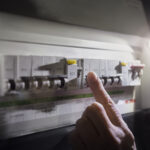
Modern electrical installations use protective devices that automatically disconnect a circuit when they detect an unsafe condition.
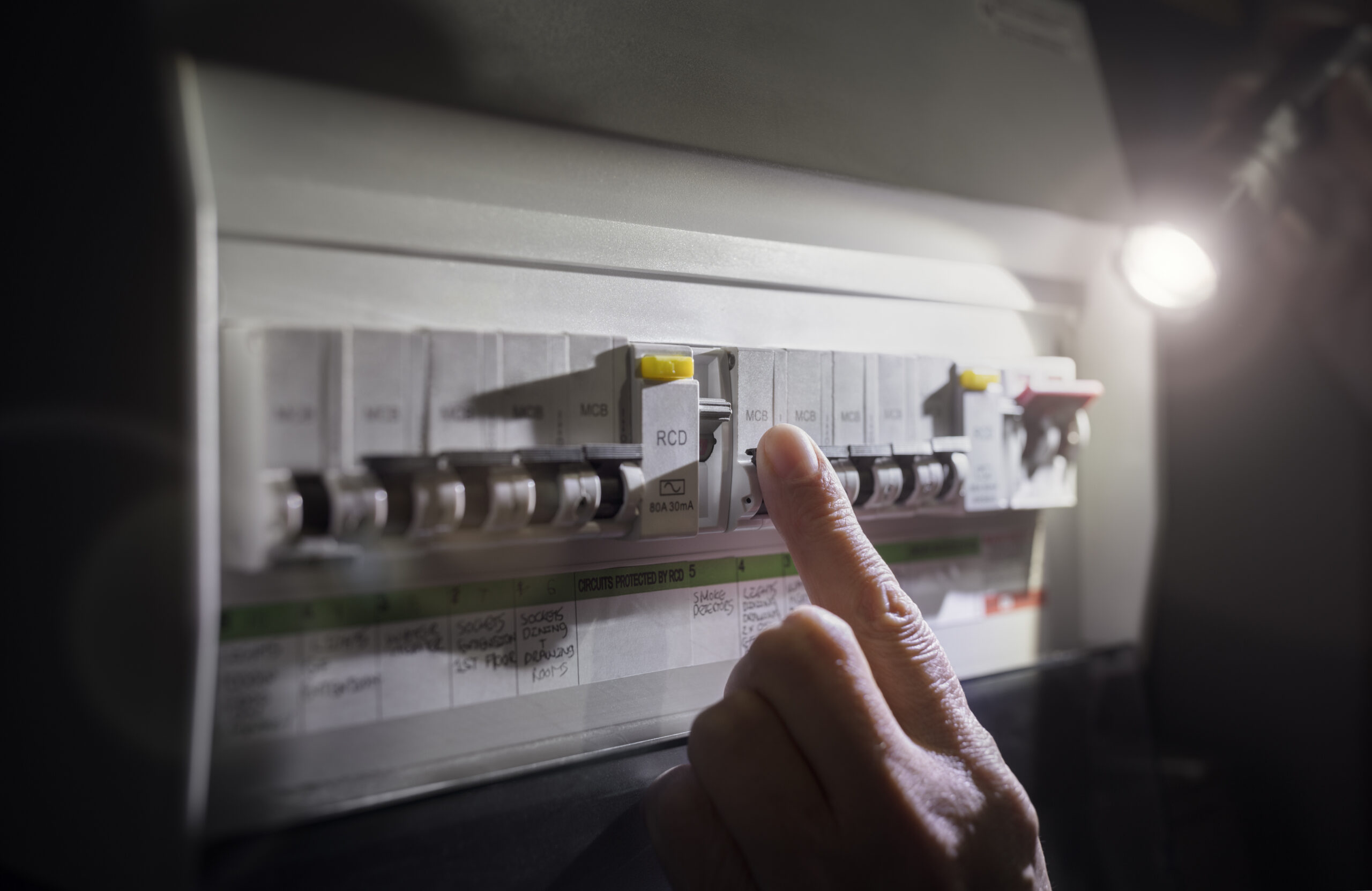
Depending on the design of the consumer unit, the device that operates may be:
- A circuit breaker
- A residual current device, commonly called an RCD
- A residual current breaker with overcurrent protection, commonly called an RCBO
- A fuse in an older fuse box
Although people often describe all of these situations as “tripping the electrics”, the reason the supply has been disconnected can vary.
A circuit breaker generally responds to excessive current caused by an overload or short circuit. An RCD monitors whether electricity is flowing where expected and disconnects the supply when it detects an imbalance that may indicate current leaking to earth.
The Health and Safety Executive explains that an RCD can rapidly switch off the supply when it detects certain electrical faults, helping to reduce the potential for injury from electric shock. It does not detect every possible fault, so it should be viewed as one part of the electrical safety system rather than a replacement for safe wiring and properly maintained appliances.
An RCBO combines both types of protection in one device. It can respond to excessive current as well as earth leakage.
Identifying which device has tripped can therefore provide useful information, but it does not always reveal the exact cause. Testing may still be required to determine whether the problem is inside the appliance, its plug and cable or the fixed electrical installation.
What are the most common reasons an appliance trips a circuit?
Appliances can cause electrical tripping for several reasons. Some problems are immediately visible, while others occur inside sealed components and cannot be identified without suitable test equipment.
The appliance has developed an internal fault
Electrical appliances contain cables, switches, motors, heating elements, control boards and other components. Any of these parts can deteriorate or fail.
An internal wire may become loose and touch the appliance casing. Insulation may break down around a heating element. A motor winding may become damaged, or moisture may enter an area containing electrical components.
When the appliance is switched on, the fault can create an unsafe current path. The protective device then disconnects the circuit.
This type of problem is common in appliances that:
- Generate heat
- Use water
- Contain pumps or motors
- Vibrate during operation
- Are frequently moved
- Are used in damp or dusty environments
Washing machines, dishwashers, kettles, tumble dryers and electric showers all operate in conditions that can place stress on their internal components. A fault does not necessarily mean the appliance is old, but wear becomes more likely as equipment ages.
The plug or power cable is damaged
The fault may be in the appliance’s flexible cable rather than its internal components.
Cables can be damaged when they are:
- Trapped beneath furniture
- Pulled tightly from a socket
- Wrapped around an appliance while still warm
- Caught in a door
- Chewed by a pet
- Bent repeatedly at the plug or appliance entry point
- Exposed to water or cleaning chemicals
A split cable or loose internal connection may cause a short circuit or earth leakage. The damage is not always obvious because the conductors inside the cable can fail while the outer insulation still appears intact.
Electrical Safety First advises users not to ignore warning signs such as circuit breakers tripping, burn marks, buzzing, crackling or electrical equipment becoming hot to the touch.
If a plug is cracked, discoloured, loose or unusually warm, stop using the appliance. Do not rely on tape or a temporary repair to make a damaged cable safe.
The appliance is drawing too much current
Some appliances require a relatively large amount of power, particularly when producing heat.
A circuit can become overloaded when several high-powered appliances operate simultaneously. This may happen when a kettle, toaster, microwave, air fryer and portable heater are all connected to outlets on the same circuit.
The appliance that appears to cause the trip may not be faulty. It may simply be the final item that pushes the total electrical demand beyond the circuit’s safe limit.
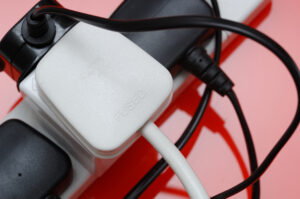
Overloading is more likely when several appliances are connected through an extension lead or adaptor. An extension lead provides more places to connect equipment but does not increase the electrical capacity of the wall socket or circuit.
London Fire Brigade advises householders not to overload extension leads and recommends particular care with high-powered appliances such as washing machines. It also identifies circuit breakers tripping without an obvious reason as a warning sign that requires attention.
There is a short circuit
A short circuit occurs when electrical conductors that should remain separate come into contact or become connected through a very low-resistance path.
This can create a sudden, high current. The circuit breaker should operate quickly to disconnect the supply.
A short circuit may be caused by:
- Damaged insulation
- A loose internal wire
- A failed switch
- A crushed cable
- A damaged plug
- A defective motor
- Incorrect previous repair work
A short circuit may cause the electrics to trip immediately when the appliance is plugged in or switched on. There may also be a flash, popping sound, burning smell or visible damage.
Do not plug the appliance back in to see whether the fault happens again. Disconnect it, provided this can be done safely, and have it inspected or replaced.
Electricity is leaking to earth
Earth leakage occurs when some current flows away from its intended path towards earth. This may happen through damaged insulation, moisture, a faulty component or the metal casing of an appliance.
An RCD monitors the current flowing through the live and neutral conductors. If the amounts differ beyond its operating threshold, it disconnects the supply.
A small amount of leakage can be present in certain appliances during normal operation. However, leakage can increase as components age or deteriorate. Several appliances with relatively small leakage currents may also combine to cause an RCD to trip, even when no single appliance has a dramatic fault.
This is one reason why an RCD may trip when several appliances are operating together but remain on when each one is used separately.
Water or moisture has entered the appliance
Water and electricity are a dangerous combination. Even a small amount of moisture can create an unintended electrical path.
Moisture-related tripping may occur in:
- Kettles
- Washing machines
- Dishwashers
- Steam irons
- Outdoor equipment
- Fridges and freezers
- Appliances stored in garages or sheds
- Equipment used near sinks or worktops
A leaking seal, overflowing container, condensation or damp storage area can all contribute.
Some moisture faults are intermittent. An appliance may work normally when dry but trip once it begins heating, pumping water or producing steam.
Do not attempt to dry a mains appliance and immediately reconnect it unless the manufacturer’s guidance clearly permits this and there is no sign of damage. Where water has entered electrical components, the appliance should be professionally assessed.
Why does an appliance trip only after running for a while?
The timing of the trip can provide useful clues.
If the electrics trip immediately, the appliance may have a direct short circuit, severe insulation fault or damaged plug and cable.
If the appliance runs for several minutes before tripping, the problem may involve a component that only operates during a particular stage.
For example:
- A washing machine may trip when its heating element activates.
- A dishwasher may trip when the water heater or drying cycle starts.
- A tumble dryer may trip when its heating system reaches operating temperature.
- A fridge may trip when the compressor starts.
- An oven may trip as a damaged element becomes hot.
- A kettle may trip as water reaches boiling point.
Heat can cause damaged insulation or internal components to expand, revealing a fault that is not present while the appliance is cold.
Similarly, an appliance containing several electrical systems may appear to work normally until the faulty component is required. This is why a washing machine might complete part of a programme before disconnecting the circuit.
An electrician or appliance repair specialist can use the timing and operating stage to help identify which component requires testing.
How can you tell whether the appliance or house wiring is faulty?
A tripped circuit does not automatically prove that the last appliance used is defective. The fault could be in the socket, fixed wiring or protective device.
However, the following patterns may help distinguish between them.
The problem follows one appliance
The appliance is more likely to be responsible when:
- The electrics trip whenever that appliance is used.
- The same appliance causes tripping in another suitable socket.
- Other appliances work normally on the original socket.
- The appliance has a damaged cable, plug or casing.
- The trip occurs at the same point in every operating cycle.
Do not repeatedly move a suspected faulty appliance between sockets. If it trips more than once, stop using it.
The problem stays with one socket or circuit
The fixed installation may require investigation when:
- Different appliances cause the same socket to trip.
- The socket is loose, cracked or discoloured.
- You hear buzzing or crackling.
- The problem affects several outlets in one area.
- Tripping occurs even after appliances have been unplugged.
- The protective device will not remain on.
- Lights flicker when appliances are used.
- There is a burning smell near the socket or consumer unit.
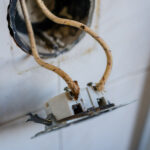
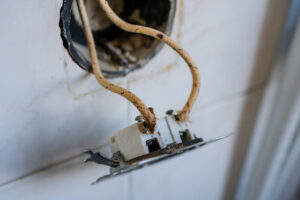
A defective socket, damaged cable or loose connection can create serious risks. Do not remove socket fronts or consumer-unit covers to investigate.
Several circuits lose power at once
When one RCD protects several circuits, a fault on a single appliance may disconnect power to multiple areas of the home.
For example, a faulty appliance in the kitchen could cause an RCD to switch off sockets elsewhere. Depending on the consumer unit design, lighting may also be affected.
This can make the problem appear more widespread than it is. An electrician can test the circuits and connected equipment to locate the source.
Is it safe to reset the electrics after an appliance trips them?
It may be reasonable to reset a protective device once after safely unplugging the appliance that appears to have caused the problem.
Before doing so:
- Switch off and unplug the suspected appliance.
- Check for smoke, heat, burning smells or visible damage.
- Make sure your hands and the surrounding area are dry.
- Reset the protective device only when there is no immediate sign of danger.
- Do not reconnect the appliance until it has been checked.
If the protective device trips again while the appliance remains disconnected, there may be another faulty appliance or a problem with the electrical installation.
Do not repeatedly force a circuit breaker or RCD back on. The device is operating because it has detected a potentially unsafe condition.
Repeated resetting can also make diagnosis more difficult because it does not address the underlying problem.
What should you do with a suspected faulty appliance?
Stop using the appliance and disconnect it from the supply when it is safe to do so.
Do not leave it available for another household member to plug back in. Attach a clear note or move it to a safe location until it can be inspected.
Depending on the appliance’s age, value and condition, your next step may be to:
- Contact the manufacturer
- Check whether it is covered by a guarantee
- Arrange a professional appliance repair
- Have the plug and cable replaced by a competent person
- Replace the appliance
- Check whether the product is subject to a safety recall
Avoid opening or repairing mains-powered equipment unless you have the necessary competence and equipment. Electrical faults may remain dangerous even when an appliance is unplugged, particularly if it contains capacitors or other components that can retain electrical energy.
When does appliance tripping need an electrician?
Arrange professional electrical fault finding when:
- You cannot identify which appliance is causing the problem.
- Several different appliances cause the same circuit to trip.
- The protective device trips with everything unplugged.
- A circuit breaker or RCD will not reset.
- Sockets are hot, loose, scorched or damaged.
- You smell burning or hear crackling.
- The consumer unit shows signs of heat damage.
- Tripping has become more frequent.
- The property has old or visibly deteriorated wiring.
- You receive an electric shock or tingling sensation from equipment.
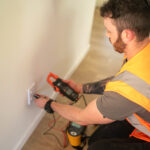
An electrician can test the fixed installation, sockets, circuit insulation and protective devices. Where appropriate, the suspected appliance can also be tested to establish whether it has an insulation fault, earth fault or excessive leakage current.
Electrical testing and fault finding should be systematic. Guessing, replacing protective devices or repeatedly reconnecting equipment may hide the symptoms without correcting the cause.
Frequently Asked Questions
Why does my kettle keep tripping the electrics?
A kettle may trip the electrics because of a damaged heating element, moisture entering its electrical components, a defective cable or an internal short circuit. Stop using it if it repeatedly trips a protective device.
Can an overloaded extension lead trip a circuit breaker?
Yes. If the combined demand of the connected appliances exceeds the safe capacity of the extension lead or circuit, the protective device may operate. High-powered appliances should not be grouped together on an extension lead.
Why does my washing machine trip the RCD halfway through a cycle?
The fault may involve a component that only operates later in the programme, such as the heating element, pump or motor. The exact cause should be confirmed through testing rather than assumed.
Can a faulty socket make an appliance trip the electrics?
Yes. A loose connection, damaged socket or fault in the fixed wiring can cause tripping even when the appliance is operating normally. If several appliances cause the same socket to trip, stop using the socket and arrange an inspection.
Why does the RCD trip when several appliances are on?
Several appliances may create a combined earth-leakage current that is sufficient to operate the RCD. The circuit may also be overloaded, depending on which protective device trips. An electrician can test the installation and appliances to identify the cause.
Should I replace an appliance that trips the electrics?
Not automatically. A repair may be practical if the appliance is relatively new and the fault can be safely corrected. However, continued use is not advisable until the cause has been identified.
Do not ignore repeated electrical tripping
A circuit breaker, RCD or RCBO that trips is carrying out an important safety function. It is disconnecting the supply because it has detected conditions that may otherwise lead to electric shock, overheating or fire.
The cause may be a defective appliance, damaged plug, overloaded circuit, moisture problem or fault within the fixed wiring. The timing of the trip and the equipment operating at the time can provide clues, but electrical testing is often needed to confirm the source.
Unplug a suspected appliance, avoid repeatedly resetting the circuit and arrange professional help if the cause is unclear or the tripping continues. Finding and correcting the fault is safer than treating the protective device as the problem.
For help investigating repeated electrical tripping or identifying a hidden fault, contact Big Fish Electrician.
Phone: 07789 214528
Email: mike.thomas@bigfishea.co.uk
Find out more: Big Fish Electrician