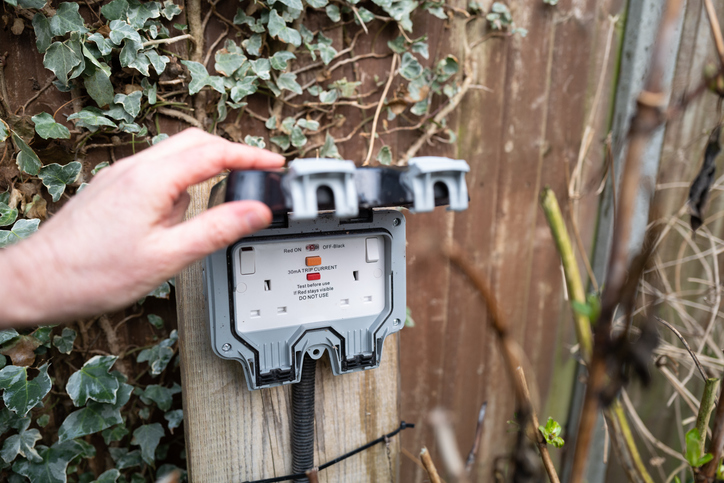
Outdoor sockets can be safe in wet weather, but only when they are designed for external use, installed correctly, protected by suitable safety devices and kept in good condition. A properly fitted outdoor socket is very different from an indoor socket being used outside with an extension lead.
The main risks with outdoor electrics are water ingress, damaged cables, unsuitable fittings, poor installation and lack of RCD protection. Rain, damp, frost, mud, garden tools and changing temperatures all create tougher conditions than indoor electrical equipment normally faces.
For many homeowners, outdoor sockets are extremely useful. They can power lawnmowers, pressure washers, garden lighting, pond pumps, Christmas lights, patio equipment and DIY tools. However, because they are exposed to the weather, they need to be installed and used carefully.
A weatherproof cover alone does not automatically make an outdoor socket safe. The full installation matters, including the cable, circuit protection, mounting position, sealing, enclosure rating and final electrical testing.
What Makes an Outdoor Socket Safe to Use in Rain?
An outdoor socket is safe to use in rain only when it is suitable for outdoor conditions and has been installed as part of a safe electrical circuit. The socket should be weather-resistant, securely fixed, correctly sealed and protected by an RCD.
A proper outdoor socket should usually include a weatherproof enclosure with a cover that protects the socket outlets from rain and splashes. It should also be positioned sensibly so it is not exposed to avoidable damage, pooling water or constant water runoff.
The cable supplying the socket must also be suitable. It needs to be correctly routed, protected from damage and connected safely. If the cable enters the socket enclosure through a poorly sealed opening, water can still get in even if the socket front looks weatherproof.
Safe outdoor electrical installation depends on several factors working together:
- A suitable outdoor-rated socket
- Correct cable type and protection
- RCD protection
- Secure fixing
- Proper sealing around cable entries
- Safe positioning
- Professional testing after installation
If one of these elements is missing, the socket may be unreliable or unsafe.
What Does Weatherproof Mean for an Outdoor Socket?
Weatherproof means the socket enclosure is designed to resist moisture and outdoor exposure. Outdoor electrical accessories usually have an IP rating, which indicates their level of protection against solid objects and water.
The right rating depends on where the socket is installed. A socket in a sheltered porch may face less exposure than one on an open garden wall, driveway or patio. Coastal and exposed locations can also be harsher because fittings may be affected by wind-driven rain and corrosion.
It is important to understand that weatherproof does not mean waterproof in every situation. A weatherproof socket is designed to handle normal outdoor conditions when installed and used correctly. It should not be pressure washed, submerged, left with damaged covers or used with plugs that prevent the lid from closing properly.
Outdoor sockets also wear over time. Covers can crack, seals can perish, screws can loosen and casing can become damaged. A socket that was safe when installed may need attention years later if it has deteriorated.
Do Outdoor Sockets Need RCD Protection?
Yes, outdoor sockets should have RCD protection. An RCD is a safety device that disconnects the power quickly if it detects current leaking where it should not. This can help reduce the risk of serious electric shock.
RCD protection is particularly important outdoors because people may be standing on damp ground, using electrical tools in the garden or handling equipment in changeable weather. Outdoor equipment is also more likely to experience physical damage or moisture exposure.
Some outdoor sockets include built-in RCD protection. Others are protected by an RCD or RCBO in the consumer unit. The right setup depends on the existing installation.
If your property has an older consumer unit, it may not provide modern RCD protection to all circuits. In that case, an electrician should check whether the outdoor socket is properly protected.
RCD protection is not a substitute for good installation. It is an additional safety measure, not permission to use damaged equipment or unsuitable sockets outside.
Can Water Get Inside an Outdoor Socket?
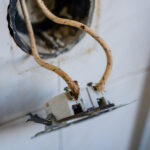
Yes, water can get inside an outdoor socket if the enclosure is damaged, badly fitted, poorly sealed or unsuitable for the location. Water can also enter through cable entry points, cracked covers, loose fittings, damaged seals or gaps between the socket and wall.
Sometimes water gets in from behind the socket rather than through the front. For example, rain may track down a wall, enter through a poor fixing point or follow a cable into the enclosure. This is why installation quality matters as much as the socket product itself.
Signs of water ingress can include:
- RCD tripping during or after rain
- Rust or corrosion inside the cover
- Dampness around the socket
- Cracked casing
- Green or white deposits around terminals
- Intermittent power
- Burning smells or buzzing
If you suspect water has entered an outdoor socket, stop using it and arrange an inspection. Do not wait for it to dry out and assume the problem has gone away. Moisture can leave corrosion and damage behind.
Why Does My Outdoor Socket Trip When It Rains?
If an outdoor socket trips when it rains, moisture is one of the most likely causes. Water may be entering the socket, connected appliance, cable joint or outdoor fitting. The RCD may then detect current leakage and disconnect the circuit.
The fault may not always be inside the socket itself. It could be caused by a garden light, pond pump, shed supply, extension lead, outside junction box or damaged cable connected to the same circuit.
Rain-related tripping can be intermittent. The circuit may work normally on dry days, then trip during heavy rain or when the ground is damp. This can make the problem tempting to ignore, especially if the power later resets.
However, repeated tripping during wet weather should always be investigated. It is a warning sign that water and electricity may be meeting somewhere they should not.
Are Outdoor Sockets Safe for Garden Equipment?
Outdoor sockets can be safe for garden equipment when the socket is correctly installed and the equipment is suitable for outdoor use. Lawn mowers, hedge trimmers, pressure washers and other garden tools should be in good condition, with undamaged plugs and cables.
The appliance matters just as much as the socket. A safe outdoor socket cannot make damaged or unsuitable equipment safe.
Before using garden tools, check the cable for cuts, splits, crushed sections or exposed conductors. Make sure plugs are dry and connections are kept off wet ground. Avoid using electrical garden tools in heavy rain unless the equipment is specifically designed for those conditions.
For corded garden tools, keep cables visible and away from blades, strimmers and sharp edges. Many outdoor electrical accidents happen because cables are cut during use.
What Should You Avoid Plugging Into Outdoor Sockets?
You should avoid plugging in anything that is not suitable for outdoor use, anything damaged, anything wet internally or anything with a cable or plug in poor condition.
Indoor appliances should not be used outside unless they are specifically designed for outdoor conditions. This includes indoor extension leads, decorative lights, household lamps and indoor heaters.
You should also avoid using outdoor sockets for high-load equipment without checking whether the circuit is suitable. Patio heaters, hot tubs, workshop tools, outdoor kitchens and garden buildings may need more than a standard outdoor socket arrangement.
A standard outdoor socket is useful for occasional garden and exterior tasks, but it should not be used as a shortcut for equipment that really needs a dedicated supply.
Why Indoor Extension Leads Should Not Be Used Outside
Running an indoor extension lead outside is one of the most common electrical safety mistakes. It may seem convenient for quick jobs, but indoor extension leads are not designed for wet grass, patios, rain or long-term outdoor exposure.
Problems can include water entering the extension socket, cables being trapped in doors or windows, plugs sitting on wet ground, overheating from coiled leads and damage from garden tools.
Using an extension lead through an open window or door also creates practical risks. The cable can be crushed, the insulation can be damaged and the lead may become a trip hazard.
If you regularly need power outside, a professionally installed outdoor socket is a safer and more reliable solution.
Can Outdoor Sockets Be Left On?
Outdoor sockets can often be left switched on if they are properly installed and in good condition. However, appliances and plugs should not be left connected unnecessarily, especially during bad weather.
Leaving equipment plugged in outside increases exposure to moisture and damage. This is particularly relevant for seasonal lighting, garden equipment, pond pumps and temporary outdoor setups.
If outdoor equipment needs to remain connected, such as a pond pump or security lighting system, make sure it is intended for continuous outdoor use and installed correctly. Temporary extension leads should not be treated as permanent wiring.
Where Should Outdoor Sockets Be Installed?
Outdoor sockets should be positioned where they are convenient to use but protected from avoidable damage and excessive water exposure. They should not be installed where water pools, where they will be hit by vehicles, where they are likely to be buried by plants or where they will be difficult to inspect.
Good locations might include an external wall near a patio, driveway, garage, garden workspace or entrance. The best position depends on how the socket will be used.
Planning the location properly reduces the need for long trailing cables. This improves safety and makes the socket more practical.
It is also worth thinking ahead. If you plan to add garden lighting, a shed, a pond, an outdoor kitchen or future landscaping, the electrical layout should be designed with those plans in mind rather than added in stages without coordination.
Outdoor Sockets for Sheds, Garages and Garden Offices
A socket on the outside wall of a house is not always enough for a shed, garage or garden office. Supplying power to an outbuilding is more involved because the circuit may need to travel underground or across an exposed route.
Outbuildings may need lighting, sockets, heating, internet equipment, tools or office equipment. This needs proper circuit design, suitable cable protection and safe isolation.
Using an outdoor socket as a long-term supply for a garden office or workshop is usually not the right approach. A dedicated supply may be needed depending on the load and intended use.
An electrician can assess what is suitable and make sure the installation is safe for long-term use.
How Should You Maintain an Outdoor Socket?
Outdoor sockets do not need complicated maintenance, but they should be checked occasionally for visible damage. You do not need to open the socket, but you can look at the condition of the cover, casing and surrounding area.
Check that the cover closes properly, the casing is not cracked, the socket is securely fixed and there are no signs of scorching, rust or water. Keep plants, soil, leaves and debris away from the socket.
Avoid directing a hose or pressure washer at the fitting. Even weatherproof sockets are not designed to be blasted with high-pressure water.
If the socket looks damaged or unreliable, stop using it and arrange a professional inspection.
When Should an Outdoor Socket Be Checked by an Electrician?
An outdoor socket should be checked by an electrician if it trips the electrics, appears damaged, has a cracked cover, feels loose, shows signs of water ingress or has stopped working.
You should also arrange an inspection if you have moved into a property and do not know when the socket was installed. Outdoor electrical work is sometimes added informally, and not every installation is safe or properly tested.
Call an electrician promptly if there is buzzing, burning, scorch marks or repeated tripping. These signs can indicate a more serious fault.
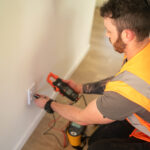
Professional testing can confirm whether the socket, circuit and RCD protection are working correctly.
Frequently Asked Questions
Can I use an outdoor socket in the rain?
A properly installed outdoor socket can be suitable for wet weather use, but only with equipment that is safe for outdoor conditions. Do not use damaged plugs, indoor appliances or connections lying on wet ground.
Why does my outdoor socket keep tripping?
Repeated tripping may be caused by water ingress, a faulty appliance, damaged cable, outdoor lighting faults or an RCD detecting leakage current. The circuit should be tested before further use.
Can I fit an outdoor socket myself?
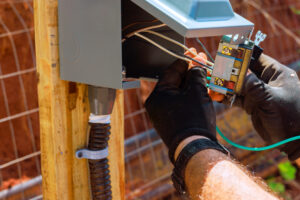
Outdoor socket installation should be carried out by a qualified electrician. It involves fixed wiring, weatherproof fittings, RCD protection and testing. Poor installation can create shock and fire risks.
Are outdoor sockets waterproof?
Outdoor sockets are weather-resistant when correctly rated and installed, but they are not immune to damage, poor sealing or extreme water exposure. The cover, seals and cable entries must remain in good condition.
Can I plug Christmas lights into an outdoor socket?
Yes, if the lights are designed for outdoor use, the socket is weatherproof and RCD protected, and all connections are kept safe from water. Indoor-only lights should not be used outside.
Final Thoughts
Outdoor sockets can be safe in wet weather, but only when the installation is suitable for outdoor conditions. The socket needs weather protection, RCD protection, safe cable routing, good sealing and proper testing.
The biggest problems usually come from damaged fittings, water ingress, unsuitable extension leads, poor DIY installation or outdoor equipment that is not designed for wet conditions. If your outdoor socket trips, looks damaged or has been affected by rain, it should be checked before you continue using it.
For outdoor sockets, garden electrics, exterior lighting and safe electrical installation across Hampshire and the surrounding areas, contact Big Fish Electrician.
Phone: 07789 214528
Email: mike.thomas@bigfishea.co.uk
Find out more: https://bigfishea.co.uk/
Find us on Checkatrade: https://www.checkatrade.com/trades/bigfishealtd