Understanding how often domestic electrics should be tested is important for maintaining a safe home. Electrical wiring, sockets, switches and protective devices can deteriorate over time, and not every developing problem produces an obvious warning sign.
For most owner-occupied homes, electrical safety guidance recommends a periodic inspection and test at least every 10 years. For rented properties, the normal maximum interval is five years, with earlier inspections required where the previous report specifies a shorter period.
However, these intervals are not a guarantee that an installation will remain safe throughout that time.
An older property, a home with a history of electrical faults or a building that has undergone substantial alterations may need professional assessment sooner.
The appropriate timing depends on the condition of the electrical installation, how the property is used and whether any concerns have developed since the previous inspection.
How often should homeowners have their electrics tested?
For an owner-occupied home, Electrical Safety First recommends periodic electrical inspection and testing at intervals of no more than 10 years.
This is a general recommendation rather than a universal legal requirement for homeowners.
The purpose of periodic testing is to establish whether the fixed electrical installation remains satisfactory for continued use.
An electrical system might operate normally while certain components are deteriorating or protective arrangements are no longer suitable.
Regular inspection provides an opportunity to identify these issues before they develop into more serious problems.
Recommended electrical inspection intervals
| Property type | Inspection interval |
|---|---|
| Owner-occupied home | Generally every 10 years |
| Private rented home | At least every 5 years, or sooner if specified |
| Social rented home in England | At least every 5 years under applicable regulations |
| Home with identified electrical concerns | Earlier assessment according to the circumstances |
| Property undergoing substantial alterations | Assessment and appropriate testing relevant to the proposed work |
These intervals reflect established electrical safety guidance and the applicable requirements for rented homes in England.

Explained / Electrical Inspection and Testing
+1
The interval recorded on an existing Electrical Installation Condition Report should also be considered.
An electrician may recommend a shorter period because of the installation’s condition, environment or use.
For example, a property where electrical equipment is exposed to particularly demanding conditions may need more frequent inspection than a typical domestic installation.
The 10-year recommendation should therefore be treated as a useful starting point, not a substitute for professional judgement.
Why do domestic electrics need periodic testing?
Electrical installations contain many components that are hidden from everyday view.
Cables may run beneath floors, inside walls and above ceilings.
Electrical connections are enclosed within sockets, switches and other accessories.
Because these components are not normally visible, deterioration can develop without a homeowner realising that something has changed.
Periodic inspection and testing helps establish whether the installation continues to provide appropriate electrical safety.
Electrical connections can deteriorate
Connections within an electrical installation need to remain secure and suitable for the current they carry.
Deterioration, damage or poor connections can affect their performance.
In some cases, faulty connections may generate excessive heat.
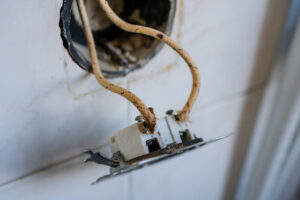
A homeowner might not notice the problem until an accessory becomes warm, discoloured or unreliable.
Electrical testing and inspection can help identify conditions that require attention.
Wiring insulation can become damaged
Electrical cables rely on insulation to prevent unintended contact between conductors and surrounding materials.
Insulation may deteriorate through ageing, physical damage or unsuitable installation conditions.
Damage can also occur during building work.
For example, drilling into a wall without establishing the location of concealed cables could damage wiring.
Depending on the nature of the fault, the circuit might continue operating despite the damage.
Appropriate electrical tests can provide information about the condition of insulation and help identify faults that would not necessarily be apparent during normal use.
Protective devices need to operate correctly
Consumer units contain devices designed to disconnect electrical circuits under certain fault conditions.
These may include circuit breakers and residual current devices, commonly known as RCDs.
An RCD is designed to provide additional protection against certain electric shock risks by detecting an imbalance in electrical current.
Simply having an RCD installed does not establish that it operates correctly.
Electrical inspection and testing can include checks of protective devices and their operation.
Do older homes need more frequent electrical testing?
The age of a property can influence the appropriate inspection interval, but it does not automatically determine whether its electrics are unsafe.
An older house may have undergone substantial electrical improvements, including rewiring, consumer unit replacement or installation of additional protective devices.
Conversely, a comparatively modern property could have problems caused by poor workmanship, damage or unsuitable alterations.
The relevant question is the condition of the installation rather than the age of the building alone.
Why older properties may deserve closer attention
Some older homes contain electrical installations completed over several different periods.
For example, a house might have received additional sockets during a kitchen renovation, new lighting during a loft conversion and replacement circuits during later improvements.
This can result in an installation containing components of different ages and designs.
There may also be uncertainty about the quality of earlier alterations.
An electrical inspection can help establish whether the installation remains suitable and identify areas needing further investigation.
What if the house still has an old fuse box?
An old fuse box does not automatically mean the installation requires complete replacement.
Traditional fuse boxes can provide overcurrent protection, although they may lack additional safety features commonly found in modern consumer units.
An electrician can assess the available protection, the condition of the equipment and its suitability for continued use.
The outcome might be a recommendation for improvement, further investigation or replacement, depending on what is found.
A decision should not be based solely on the appearance of the fuse box.
When should electrics be tested before the 10-year interval?
There are several situations where arranging electrical inspection or assessment sooner may be sensible.
These are not all circumstances requiring a complete EICR. Sometimes a targeted investigation or testing associated with particular electrical work is more appropriate.
When buying an older property
Buying a property is an opportunity to establish the condition of its electrical installation before taking responsibility for future repairs and improvements.
A standard property survey does not usually provide the detailed electrical testing included in an EICR.
For example, a surveyor might identify an older consumer unit or recommend further electrical investigation.
An electrician can then assess the installation and provide a more detailed understanding of its condition.
This information can help buyers plan any necessary work and account for potential costs.
Electrical Safety First recommends periodic inspection when purchasing a previously occupied property.
Explained / Electrical Inspection and Testing
Before major renovation work
Renovations can involve significant changes to electrical circuits.
A kitchen extension might require additional appliance supplies, while a loft conversion could involve new lighting and socket circuits.
Before designing these alterations, it may be necessary to establish the condition and suitability of the existing installation.
For example, connecting new circuits to an unsuitable consumer unit could require further electrical improvements.
Identifying this before construction begins can help homeowners develop a realistic budget and avoid unnecessary disruption.
The assessment required will depend on the proposed work and should not automatically be confused with a complete periodic inspection.
After significant electrical damage
Electrical installations can be affected by water leaks, flooding, accidental cable damage or other incidents.
A ceiling leak, for instance, might expose electrical fittings or wiring to moisture.
Even after the visible water has dried, damage may remain.
The affected electrical equipment should be assessed before being returned to service where there is a risk of damage.
In such circumstances, targeted inspection and testing may be more appropriate than waiting for the next routine EICR.
When electrical problems keep occurring
Repeated electrical faults should be investigated rather than left until the next scheduled inspection.
Examples include circuit breakers operating repeatedly, sockets losing power and lights flickering unexpectedly.
These symptoms may indicate faults requiring electrical testing.
However, there is an important distinction between routine inspection and fault finding.
An EICR assesses the general condition of an installation, while electrical fault finding is directed towards identifying the cause of a particular problem.
The most suitable service depends on the circumstances.
What warning signs indicate that electrical testing may be needed?
Some electrical problems produce visible or noticeable symptoms before a complete failure occurs.
Homeowners should pay attention to changes in how their electrical installation behaves.
Warning signs include:
- Repeatedly tripping circuit breakers or RCDs
- Sockets or switches showing signs of overheating
- Buzzing or crackling from electrical accessories
- An unexplained burning smell
- Visible damage to sockets, switches or wiring
- Intermittent power to circuits or appliances
- Electric shocks or tingling sensations when touching equipment
These symptoms warrant prompt professional attention rather than waiting for a scheduled periodic inspection. Electrical Safety First specifically identifies overheating, unusual electrical noises and repeated protective-device operation as reasons to seek professional advice.
Your Questions Answered
If there is smoke, fire or an immediate danger, move to safety and contact the emergency services.
Where an electrical accessory appears damaged or is overheating, stop using it. If the affected circuit can be isolated safely, do so without touching damaged equipment.
What happens during a domestic electrical inspection?
A periodic electrical inspection examines the condition of the fixed electrical installation.
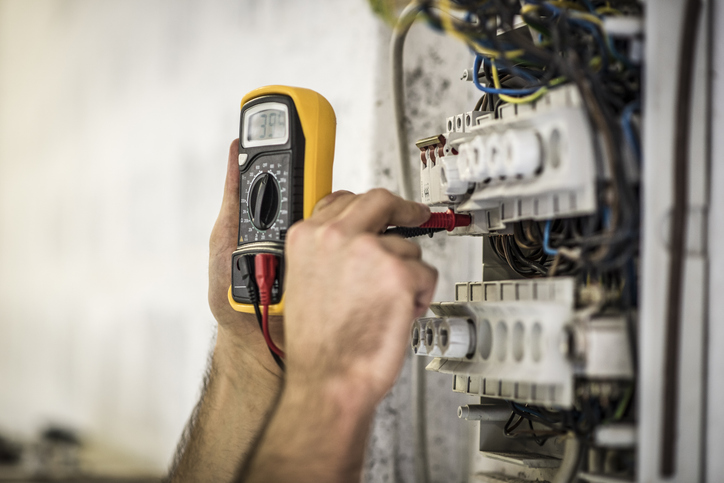
The electrician will assess relevant components and carry out appropriate tests to determine whether the installation is satisfactory for continued use.
The inspection may involve the consumer unit, electrical circuits, wiring accessories, earthing arrangements and protective devices.

Visual inspection
The electrician examines accessible parts of the installation for evidence of damage, deterioration or unsuitable arrangements.
This may include checking the condition of electrical accessories, identifying visible wiring defects and assessing the consumer unit.
The age and design of components may also be relevant.
However, older equipment is not automatically classified as dangerous simply because it does not meet every requirement applicable to a newly installed system.
Electrical testing
The inspection may include several types of testing, depending on the installation and the inspection’s agreed extent.
These can include continuity testing, insulation resistance testing, polarity checks and verification of protective devices.
Each test serves a different purpose.
For example, insulation resistance testing provides information about the integrity of insulation between conductors.
Continuity testing helps establish whether relevant electrical paths are complete.
Protective-device testing can establish whether certain devices operate as expected.
The electrician should select appropriate procedures and take precautions to protect connected equipment during testing.
Recording the findings
Following a periodic inspection, the electrician provides an Electrical Installation Condition Report, commonly called an EICR.
The report records observations, limitations and any defects identified.
It also indicates whether the installation is considered satisfactory or unsatisfactory for continued use.
An EICR is not the same document as an Electrical Installation Certificate issued for new installation work.
What do the EICR classifications mean?
An EICR uses observation codes to describe certain defects and their significance.
Understanding these codes helps homeowners interpret the report.
| Code | Meaning | Practical implication |
|---|---|---|
| C1 | Danger present | Immediate action required to remove danger |
| C2 | Potentially dangerous | Urgent remedial work required |
| C3 | Improvement recommended | Improvement advised, but this code alone does not make the report unsatisfactory |
| FI | Further investigation required without delay | Further investigation needed to establish the safety of the installation |
A report containing C1, C2 or FI observations will normally receive an unsatisfactory outcome.
A C3 observation, by itself, does not make an EICR unsatisfactory.
The report should help the homeowner understand what requires attention and the relative seriousness of the findings.
For example, an older feature might receive an improvement recommendation without representing an immediate danger.
By contrast, exposed live parts would require a much more urgent response.
The electrician should explain the findings and any recommended remedial work.
Does a satisfactory EICR guarantee electrical safety for 10 years?
No. A satisfactory EICR records the condition of the installation at the time of the inspection, within the agreed scope and limitations.
It does not guarantee that faults cannot develop afterwards.
For example, a circuit might be satisfactory when tested but suffer damage during building work the following year.
Similarly, an electrical accessory could deteriorate through use after the inspection.
The recommended next inspection date does not mean homeowners should ignore developing faults.
Routine awareness of electrical safety remains important between formal inspections.
It is also worth remembering that an EICR primarily concerns the fixed electrical installation.
It does not automatically establish that every portable appliance in the property is safe.
Are landlords required to test electrics more frequently?
Yes. Rental properties in England are subject to legal electrical safety requirements that differ from the general recommendations applying to owner-occupied homes.
Under the current regulations, landlords must arrange inspection and testing of fixed electrical installations at intervals of no more than five years, or sooner where the previous report requires it.
The requirements now include relevant private and social rented properties in England, subject to the applicable transitional provisions.
Landlords must also obtain the required report and supply copies to tenants within the prescribed timescales.
GOV.UK
However, the requirements for rental properties should not be confused with the general homeowner recommendation.
A person living in a home they own is not ordinarily required to commission a new EICR every five years simply because rental regulations specify that period.
Different requirements may apply where a property changes from owner-occupation to rental use.
For homeowners considering letting a property, checking the applicable legal requirements before the tenancy begins is essential.
How should homeowners plan future electrical inspections?
A useful starting point is to establish when the property last received a periodic inspection.
If an EICR is available, it should identify the inspection date, observations and recommended next inspection interval.
Homeowners can then consider whether anything has changed since that assessment.
For example, substantial electrical alterations, water damage or repeated electrical faults may justify earlier professional attention.
Where there is no record of a previous inspection, the history of the installation may be uncertain.
This is particularly relevant after purchasing an older property where electrical work may have been carried out by several previous owners.
An electrician can help determine whether a complete periodic inspection is appropriate.
Keeping records of electrical certificates, reports and subsequent repairs also makes future maintenance easier.
Big Fish Electricians provides domestic electrical inspection, testing and certification services in Hampshire and surrounding areas.
These services can help homeowners establish the condition of existing electrical installations and understand whether further investigation or improvements are needed.
Frequently Asked Questions
Is electrical testing compulsory for homeowners?
There is generally no universal legal requirement for owner-occupiers in England to obtain an EICR every 10 years. However, periodic inspection is strongly recommended, and relevant electrical work must comply with applicable Building Regulations.
How long does a domestic electrical inspection take?
The duration depends on the size of the property, the number of circuits, accessibility and the condition of the installation. An electrician can provide a more useful estimate after establishing the scope of the work.
Does a new consumer unit mean the house has been fully tested?
Not necessarily. Consumer unit replacement involves relevant inspection, testing and certification, but this should not automatically be interpreted as equivalent to a complete periodic inspection of the entire property. The certificates and documentation should explain the work covered.
Can you sell a house without an EICR?
An EICR is not generally a universal legal requirement for selling an owner-occupied home in England. However, buyers may request information about the electrical installation, and an inspection can help identify issues before the sale.
Should electrics be tested after a house rewire?
A rewire requires appropriate inspection and testing before the new installation is put into service. An Electrical Installation Certificate should document the completed work. This is different from a periodic EICR carried out on an existing installation.
Keeping your home’s electrics safe between inspections
For most owner-occupied homes, arranging a periodic electrical inspection at least every 10 years provides a sensible maintenance benchmark.
However, electrical safety is not determined by an inspection date alone.
The condition of the installation, previous alterations, property use and any developing faults should influence when professional attention is required.
Older properties do not automatically need rewiring, and every electrical problem does not require a complete EICR. The important thing is to arrange the appropriate assessment for the circumstances.
If your property has not been inspected for many years, you are planning significant improvements or you have concerns about the condition of your electrics, Big Fish Electricians can help with domestic electrical testing and inspection.
Phone: 07789 214528 Email: mike.thomas@bigfishea.co.uk Find out more: https://bigfishea.co.uk/