A plug socket not working can be frustrating, particularly when it affects an appliance you use regularly. In some cases, the explanation is relatively straightforward, such as a faulty appliance or a tripped circuit breaker. In others, a socket that suddenly stops supplying electricity can indicate damaged wiring, a loose connection or another electrical fault that requires professional attention.
The first thing to establish is whether the problem affects one socket, several sockets or an entire electrical circuit.
For example, if the television stops working but other equipment plugged into the same double socket operates normally, the issue may be with the television or its power lead. If every socket in a room has stopped working, the cause could involve a circuit breaker or a fault elsewhere in the installation.
Understanding these differences can help homeowners explain the problem accurately and avoid potentially dangerous attempts at repair.
However, a socket that is not supplying electricity should never automatically be assumed to be safe. Electrical connections may remain live even when an appliance does not operate.
Why would one plug socket suddenly stop working?
When a single socket stops working while other outlets continue operating normally, there are several possible explanations.
The problem could be within the socket itself, the wiring supplying it or the equipment connected to it.
The fact that other sockets still work does not necessarily mean the affected socket has a minor problem.
A faulty socket mechanism
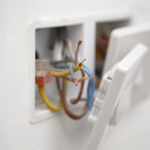
Electrical sockets contain internal contacts that provide the connection between a plug and the electrical supply.
These contacts can deteriorate through repeated use, damage or overheating.
For example, a frequently used socket behind a kitchen appliance may experience more wear than an outlet that is rarely used.
If the internal mechanism becomes damaged, the socket may stop providing a reliable electrical connection.
Possible signs include a plug that no longer fits securely, intermittent operation or one outlet on a double socket failing while the other continues working.
These symptoms require assessment because poor electrical connections can generate heat.
A loose electrical connection
Another possible cause is a loose connection at the socket terminals or elsewhere in the circuit.
Electrical connections need to remain secure to provide a reliable path for current.
If a connection becomes loose, the electrical supply may be interrupted.
In some circumstances, the connection may still conduct electricity intermittently.
This can create a situation where a socket appears to work normally at certain times but stops working unexpectedly.
Loose connections can also cause localised heating or electrical arcing.
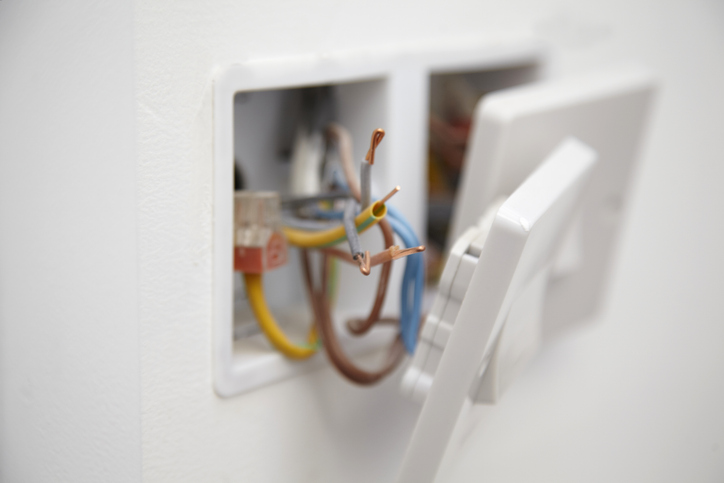
The absence of visible damage does not rule out a problem behind the socket faceplate.
Damage to the socket
Sockets may be damaged through accidental impact, excessive force or unsuitable use.
For example, pulling a plug out by its cable rather than gripping the plug itself can place unnecessary strain on equipment and connections.
A socket may also become loose from its mounting.
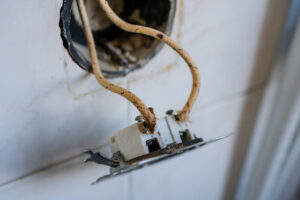
Visible cracks, exposed components or signs of overheating should be treated as safety concerns.
Electrical Safety First advises against ignoring warning signs such as burn marks, buzzing, crackling or excessive heat around plugs and sockets.

electricalsafetyfirst.org.uk
+1
A damaged socket should not be used until it has been assessed and made safe.
What causes several sockets to stop working at once?
When multiple sockets lose power simultaneously, the cause may involve a shared electrical circuit rather than individual socket failures.
This distinction can help narrow down the possible problem.
Most homes have electrical circuits supplying groups of sockets, although the arrangement varies between properties.
A circuit might supply sockets on one floor, in several rooms or within a particular area of the house.
If that circuit loses power, all the sockets connected to it may be affected.
A circuit breaker has tripped
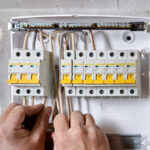
Modern consumer units commonly contain miniature circuit breakers, known as MCBs.
These devices protect electrical circuits against excessive current caused by overloads or short circuits.
When certain fault conditions occur, the circuit breaker disconnects the supply.
This can leave multiple sockets without electricity while lighting and appliances on other circuits continue operating.
For example, a fault in an appliance connected to the kitchen socket circuit might cause its protective device to operate.
Other sockets on that circuit could then lose power, even if they are located in another room.
The problem is not necessarily with every affected socket.
Instead, the circuit has been disconnected because the protective device has operated.
An RCD has operated
A residual current device, or RCD, provides additional protection against certain electrical faults that can cause electric shock.
It monitors the balance of current flowing through the conductors it protects.
If the device detects a sufficient imbalance, it disconnects the supply.
Depending on the consumer unit arrangement, one RCD may protect several circuits.
This means a fault involving one appliance or circuit could interrupt electricity to multiple areas of the property.
For example, sockets in the kitchen and utility room might lose power simultaneously because they share an RCD, even though the individual circuit breakers remain switched on.
An RCBO combines overcurrent and residual current protection for an individual circuit, which can help limit the consequences of some faults to that circuit.
A fuse has blown
Older fuse boxes may contain rewireable or cartridge fuses rather than resettable circuit breakers.
A fuse operates when excessive current flows for long enough to activate it.
Once the fuse has operated, the affected circuit loses power until the fault has been addressed and the correct fuse is replaced.
Repeated fuse failures indicate a problem that needs investigation.
Replacing a fuse without establishing why it operated can allow an underlying fault to remain.
Could the appliance be responsible rather than the socket?
Not every appliance that fails to operate indicates a problem with the electrical installation.
Sometimes the socket is functioning correctly, but the equipment connected to it has developed a fault.
This is particularly worth considering when only one appliance appears to be affected.
For example, a kettle might stop heating because of an internal fault, a damaged power lead or a failed plug fuse.
A homeowner may initially assume the socket is defective because the appliance no longer works.
However, another working appliance might operate normally from the same outlet.
What basic checks can homeowners safely make?
If there are no signs of danger, some straightforward checks can help establish whether the problem is associated with the appliance or the electrical supply.
These include:
- Checking whether other sockets in the room are working.
- Checking whether the affected appliance works from another known-working socket.
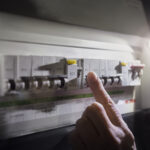
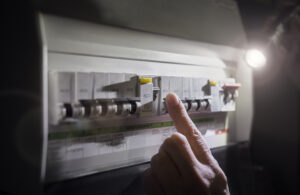
- Looking at the consumer unit for a visibly tripped protective device.
- Checking whether there is a wider power cut affecting the property.
- Noting whether the problem started after a particular appliance was connected.
Do not test equipment that appears damaged or has caused overheating, burning, sparking or repeated tripping.
If a protective device has operated, NICEIC advises disconnecting appliances on the affected circuit before attempting to reset it. If the device immediately trips again, further resetting should be avoided and a registered electrician should investigate.
NICEIC
Homeowners should not remove socket faceplates, inspect internal terminals or attempt live electrical testing.
These activities require appropriate knowledge, equipment and safe isolation procedures.
Why do some sockets work intermittently?
An intermittent socket fault can be particularly difficult to understand because the problem may appear to resolve itself.
For example, a lamp might work normally for several hours before suddenly switching off.
It may then begin operating again without any obvious explanation.
This does not necessarily mean that the electrical fault has disappeared.
Intermittent problems can be associated with loose electrical connections, damaged cables, deteriorating socket contacts or faults affecting the connected equipment.
Why intermittent faults should not be ignored
A poor electrical connection may create resistance and localised heating when current flows.
Depending on the fault, electrical arcing may also occur.
The socket might continue working at times, giving the impression that the problem is relatively minor.
However, unreliable operation can indicate deterioration that requires investigation.
For example, if a socket works only when a plug is held in a particular position, it should not be treated as a harmless inconvenience.
Continuing to use the socket could worsen the problem.
The appropriate response is to stop using the affected outlet and arrange professional assessment.
Can damaged wiring cause sockets to lose power?
Yes. Problems with the wiring supplying a socket can interrupt the electrical connection even when the socket itself appears undamaged.
Electrical cables are generally installed within walls, floors or other building structures.
Because much of the wiring is concealed, damage may not be visible.
Several circumstances can affect electrical cables.
Accidental damage during building work
Drilling into walls or installing fixings can sometimes damage concealed electrical cables.
For example, fitting new kitchen cabinets, shelves or wall-mounted equipment may involve drilling near existing cable routes.
If a cable is damaged, the consequences can range from immediate circuit disconnection to an intermittent or dangerous electrical fault.
A socket that stops working following drilling or renovation work should be treated as a potential wiring issue.
Further use of the affected circuit should be avoided until the situation has been assessed.
Deteriorating or unsuitable wiring
Electrical installations can contain wiring installed at different times and to different standards.
Older properties may have undergone several alterations, with additional sockets and circuits installed during successive renovations.
This can make fault diagnosis more complicated.
The condition of the wiring, connections and protective devices all need to be considered.
However, the age of a property alone does not establish that its wiring is unsafe.
A professional inspection is needed to determine whether deterioration or defects are present.
Problems at another point on the circuit
A socket that has stopped working may not be the location where the actual fault occurred.
Depending on how the circuit is arranged, a poor connection elsewhere could affect the supply to another socket.
This is one reason why replacing the visibly affected socket does not always resolve the problem.
The electrician needs to establish where the circuit has lost continuity or developed a fault.
What if only one side of a double socket works?
A double socket contains two outlets within a single accessory.
If one side works normally while the other does not, this can indicate a problem with the internal mechanism or contacts.
For example, one outlet might have deteriorated through repeated use while the other remains functional.
However, the fault cannot be diagnosed reliably through appearance alone.
The damaged mechanism could also present a risk to the remaining outlet.
A homeowner should avoid using the affected double socket until it has been checked.
Replacing the complete socket accessory may be appropriate if the fault is confined to the unit, but an electrician should also assess the connected wiring and confirm that the installation is safe.
How does an electrician find the cause of a faulty socket?
Professional electrical fault finding involves establishing what has failed and why.
This is different from simply replacing a socket because it has stopped working.
An electrician may begin by asking questions about the symptoms.
For example:
- Did the socket stop working suddenly or become unreliable over time?
- Are other sockets affected?
- Has a circuit breaker or RCD operated?
- Did the problem begin after building work or appliance use?
- Are there signs of overheating, burning or physical damage?
The answers help identify where investigation should begin.
Inspecting the electrical installation
The electrician may assess the condition of the affected socket, consumer unit and relevant circuit components.
Visible damage or deterioration can provide useful evidence.
However, not every fault can be identified visually.
Concealed connections and wiring may require further investigation.
Carrying out electrical tests
After establishing appropriate safe isolation, an electrician can use specialist test equipment to examine the circuit.
Depending on the suspected fault, this may involve continuity testing, insulation resistance testing or checks of protective devices.
For example, continuity testing can help identify interruptions in relevant conductors.
Insulation resistance testing can provide information about deterioration or damage affecting electrical insulation.
The choice of tests depends on the circuit and the symptoms.
Testing should be carried out using suitable procedures to protect both the electrician and any connected equipment.
Identifying the appropriate repair
Once the fault has been located, the required work may be relatively straightforward or more involved.
A defective socket accessory might need replacing.
A damaged connection could require repair.
If concealed wiring has been damaged, part of the circuit may need replacing.
The appropriate solution should address the underlying cause rather than merely restoring power temporarily.
Big Fish Electricians provides electrical fault finding for homes and other properties around Portsmouth and Fareham. Its published services specifically include diagnosing faulty sockets, intermittent power and unexplained electrical problems.
The business also states that it explains the proposed scope of repairs and carries out appropriate testing before completing electrical work.
This is particularly relevant when a socket fault could involve more than the visible accessory.
When is a faulty socket an electrical emergency?
Not every socket that stops working is an emergency.
However, certain symptoms indicate an increased risk and require immediate attention.
Examples include:
- A burning smell coming from the socket or surrounding area.
- Visible smoke, scorching or melted plastic.
- Buzzing, crackling or unusual electrical noises.
- A socket or plug that becomes excessively hot.
- Sparking or signs of electrical arcing.
- An electric shock when touching connected equipment.
- Repeated tripping associated with the affected socket.
These are warning signs identified by electrical safety organisations, including NICEIC and Electrical Safety First.
NICEIC
+1
If these symptoms occur, stop using the affected equipment and keep other people away from the socket.
Where it is safe to do so, the affected circuit can be switched off using its protective device. Do not touch damaged equipment or attempt to disconnect a hot or sparking plug.
If there is smoke, fire or immediate danger, move to safety and contact the emergency services.
Otherwise, contact a qualified electrician promptly and explain the symptoms.
A socket that has overheated should not be used again simply because it has cooled down.
Is it better to repair or replace a faulty socket?
The answer depends on the cause of the problem.
If the fault is confined to a damaged socket accessory, replacement may be a suitable solution.
However, replacing the accessory will not address damaged wiring or a loose connection elsewhere on the circuit.
For example, suppose a socket stops working because of a broken connection in a concealed cable.
Installing a new socket in the same position will not repair the damaged cable.
Similarly, a socket that has suffered overheating may have damaged conductors or terminations that require additional attention.
An electrician should assess the extent of the fault before determining the appropriate repair.
This distinction helps avoid unnecessary replacement work and reduces the likelihood of the same problem recurring.
What should homeowners do after a socket fault has been repaired?
Once the cause has been identified and the repair completed, the electrician should undertake the relevant checks to confirm that the affected installation is safe.
The necessary testing depends on the work carried out.
A straightforward socket replacement may require different documentation from substantial alterations to a circuit.
Where appropriate, the electrician should explain the results and identify any wider concerns discovered during the investigation.
For example, if an isolated socket fault reveals deterioration elsewhere in an older installation, further inspection may be recommended.
That does not automatically mean the property needs rewiring.
Instead, the recommendation should reflect the actual condition of the installation and the risks identified.
Homeowners can also reduce avoidable electrical problems by using sockets appropriately, avoiding damaged accessories and arranging prompt investigation of unusual symptoms.
Frequently Asked Questions
Can a socket stop working without tripping the fuse box?
Yes. A socket can fail because of damaged internal contacts, a loose connection or an interruption in its supply wiring without necessarily operating a circuit breaker or RCD. The socket may still contain live components and should not be assumed safe.
Why are my plug sockets not working but the lights are?
Lighting and socket circuits are often supplied separately. A fault or protective device operating on a socket circuit may interrupt the sockets while the lighting continues working. The exact cause depends on the property’s circuit arrangement.
Can a faulty socket affect other sockets?
Yes. Depending on the circuit arrangement and the location of the fault, a damaged connection can affect other outlets. An electrician may need to investigate several points on the circuit to identify the cause.
How much does it cost to repair a faulty plug socket?
The cost depends on whether the problem involves the socket accessory, its connections or the wider electrical circuit. A straightforward replacement may involve less work than tracing and repairing concealed cable damage. An assessment can establish the likely scope of repairs.
Is it safe to leave a broken socket unused?
Not necessarily. A socket that does not work may still contain live electrical connections, and some faults can present risks even when nothing is plugged in. Damaged or potentially dangerous sockets should be professionally assessed rather than simply ignored.
Understanding why your sockets have stopped working
A plug socket can stop working for several reasons, from a failed appliance or tripped protective device to damaged wiring or deteriorating electrical connections.
The most useful initial distinction is whether the problem affects a single outlet, several sockets or an entire circuit.
Simple external checks may help establish the circumstances, but they cannot reliably determine the condition of concealed wiring or internal connections.
If a socket is damaged, operates intermittently or shows signs of overheating, it should not be used until the fault has been investigated.
Restoring electricity is only part of the solution. The underlying cause needs to be identified so that the repair is safe and reliable.
If you have a faulty plug socket, intermittent power or an unexplained electrical problem, Big Fish Electricians provides electrical fault finding and repairs throughout Portsmouth, Fareham and surrounding areas. Contact the team to describe the problem and discuss the most appropriate next step.
Phone: 07789 214528 Email: mike.thomas@bigfishea.co.uk Find out more: https://bigfishea.co.uk/